My name is Cassian Ryker.
I am a Martian guide for Ares Horizons. In the paperwork I am listed as organizer, guardian and pilot of the expedition all in one. In practice, this means that I am responsible for the lives of people who have paid a fortune for a few days in a place where a person should not be at all.
Olympus Mons is the highest volcano in the Solar System. It rises over twenty-two kilometers and spans nearly six hundred kilometers in diameter. It doesn’t resemble a typical mountain — more like a massive bump on the surface of a planet, its edges jagged and unfinished.
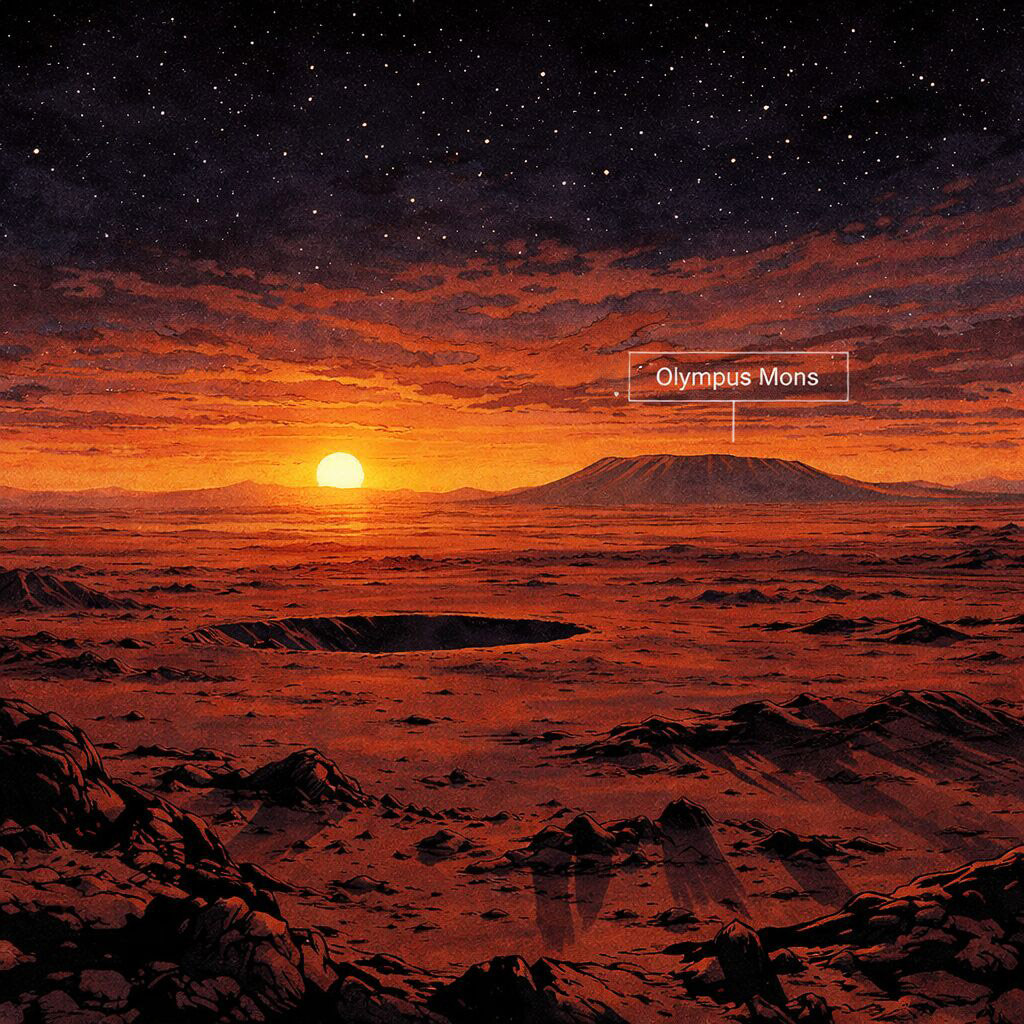
At this altitude, the atmosphere is virtually non-existent. Pressure drops to fractions of a percent of Earth's. The temperature can drop below minus one hundred degrees.
Without a spacesuit, a person would not even survive a few seconds there. This isn’t an environment at all — just vacuum and dust.
The tour plan is simple and based solely on equipment. Aerolander, life support systems, heating, communications. Everything redundant. All theoretically reliable.
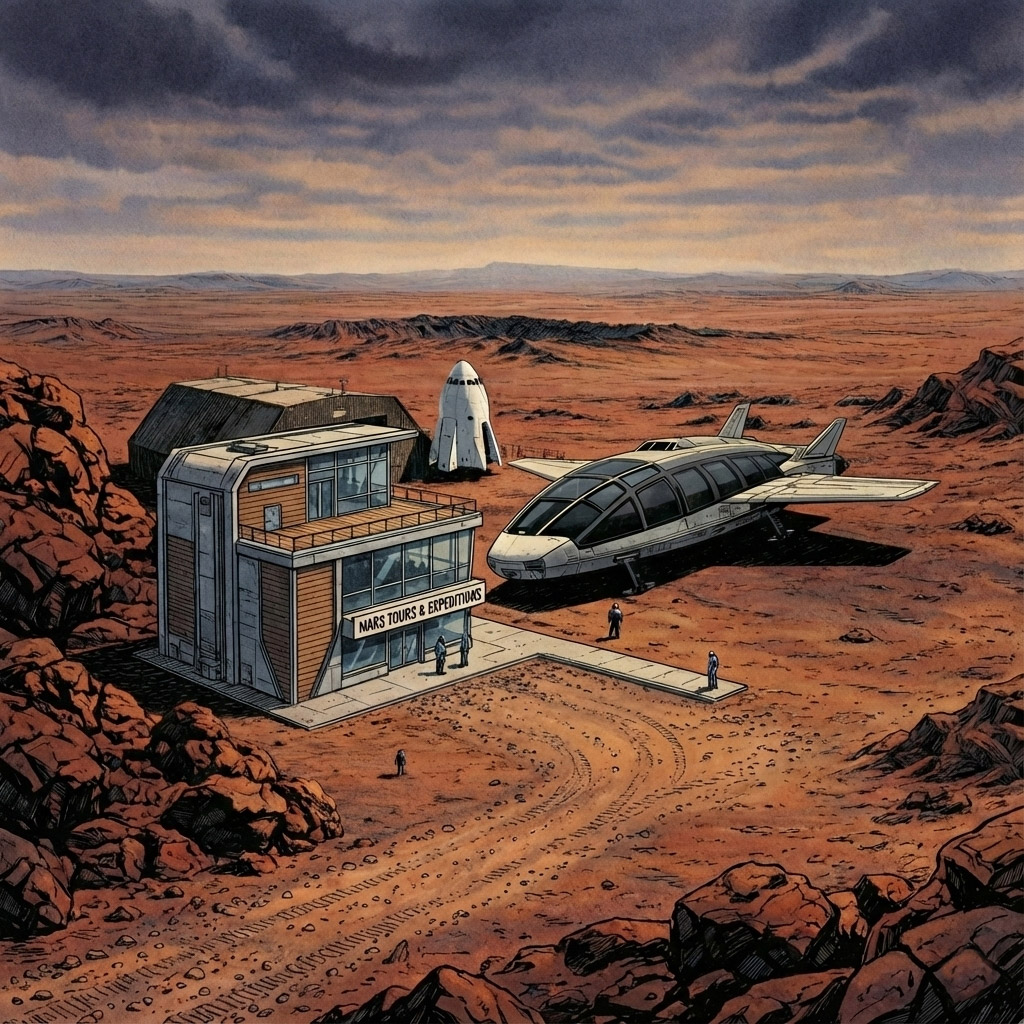 Six participants come on board.
Two investors from Earth, a pair of bioengineers working on terraforming projects, and an elderly millionaire who has said for years that „if you're going to die, at least die on Mars”.
Six participants come on board.
Two investors from Earth, a pair of bioengineers working on terraforming projects, and an elderly millionaire who has said for years that „if you're going to die, at least die on Mars”.
The sixth to enter is her - Vesper Nova.
Influencer. A star of the web. Millions of followers. Her name was mentioned at board briefings more often than the names of the engines that make us fly today. She is confident, talks a lot and willingly - to people, to cameras, to herself. She knows what she is worth, and is not in the habit of pretending to be modest.
Her jumpsuit gleams like something out of a commercial: black, sleek, designed to look good in any frame. Custom. Not sourced from agency resources.
I check the markings.
No certification for extreme low pressure above fifteen kilometers.
„It’s better than yours,” she says without hesitation. „Lighter, more flexible. I tested it. And people recognize me by it.”
She assures that she takes responsibility for herself.
She assures that it is an image issue.
She insists that she wants to perform in it.
I look at her smile.
I look at Olympus Mons visible in the distance.
The decision seems minor. For now.
[story_progress current=”3″ total=”10″] I refused. Vesper looked at me in silence for a moment, as if she didn't quite believe what she had heard. Then she smiled, but this time it was a learned smile.
„I understand.” - she said calmly. „Safety first.”
Some participants looked at me with obvious displeasure. Someone sighed. Someone else looked away.
In the logs, everything was according to procedure.
On board - a tension that no one has named.
[story_progress current=”3″ total=”10″] I agreed. Vesper smiled broadly, almost girlishly, as if she had just received a gift. Several participants took a breath. The atmosphere on board had visibly relaxed.
„I promise you won't regret it.” - she said quietly, leaning toward me.
In the logs, I checked the deviation from procedures. One box. One click. Nothing that looked threatening.
We are starting the launch procedure.
The aerolander is hovering hard, slowly gaining altitude. We have three hundred kilometers of flight ahead of us to the base of Olympus Mons, and then another several hundred kilometers deep into the volcano, toward the highest parts of the caldera - nearly eighty kilometers wide and more than three deep.
This is where the views are most spectacular.
This is where only a few hundred of our agency's clients have reached so far.
Ares Horizons is the market leader in Martian tourism. We open new destinations. We sell experiences that only a decade ago were the domain of astronauts.
Privately, I think Olympus Mons is overrated. Too flat. Too vast. Boring.
Much more interesting to me are the Valles Marineris canyons, more than eight kilometers deep and stretching for thousands of kilometers, or the giant lava caves where Mars looks really alien. But people want „the highest point”.
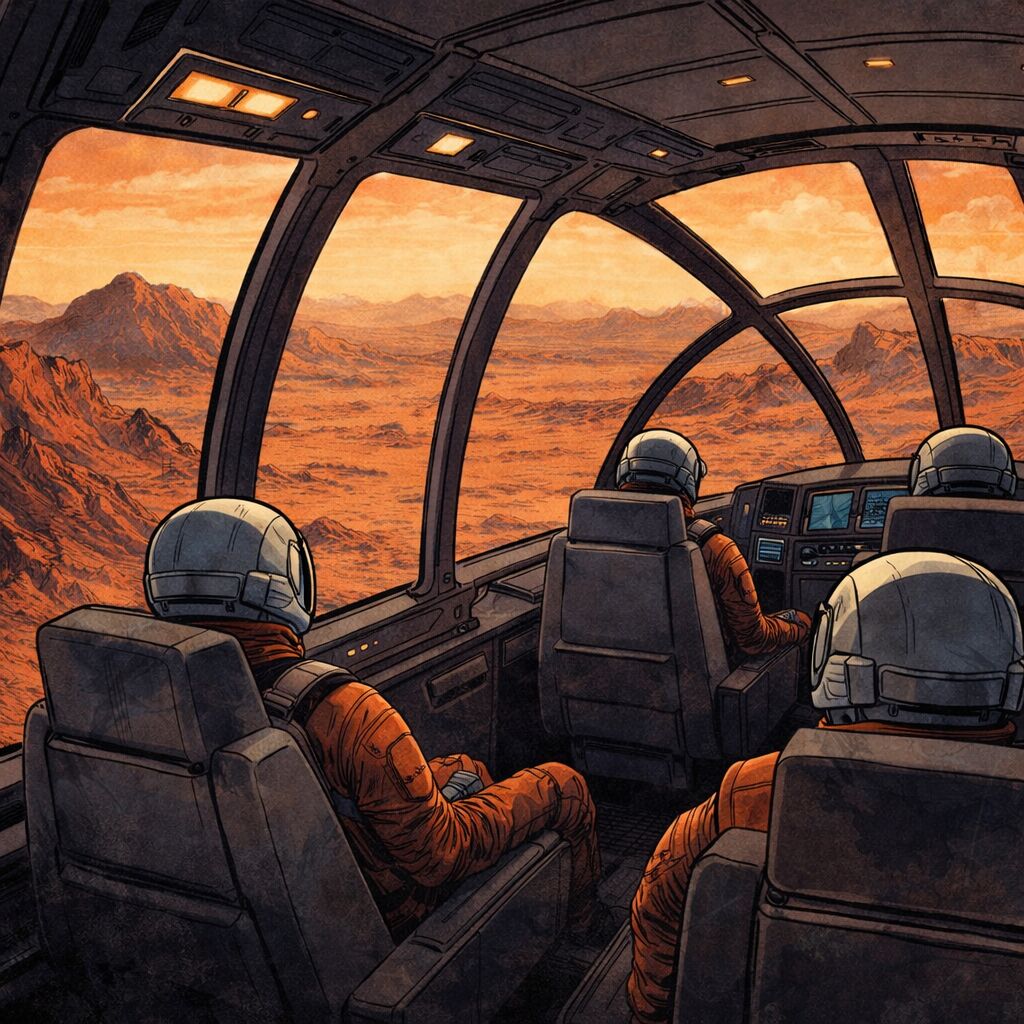
Vesper appears next to me in the cockpit. This time without cameras.
She smiles. That smile known to half of the planet.
„Cassian,” she says softly. „Imagine the sunset over the top. Just think about it. I must have that shot. Please.”
She leans in slightly, as if it were an intimate request, not a logistical demand.
I'm already counting.
To see the sunset over the top, I would have to change my route. To go around the massif in a wide arc. An extra two hours of flying. More fuel consumption. Consumption of time margin.
Other participants hear snippets of the conversation. Some are delighted with the vision. Others ask if it's safe.
The decision is up to me.
I refused.
I explained calmly: fuel, margin, plan for tomorrow. Numbers, not emotions.
Vesper listened to me in silence. Then she nodded and returned to her seat.
The participants were not thrilled, but no one protested openly.
The flight continued.
The views were impressive.
Not as impressive as the ones they didn't see.
I agreed.
The autopilot recalculated the route. Fuel consumption increased as predicted. The schedule slipped by almost three hours.
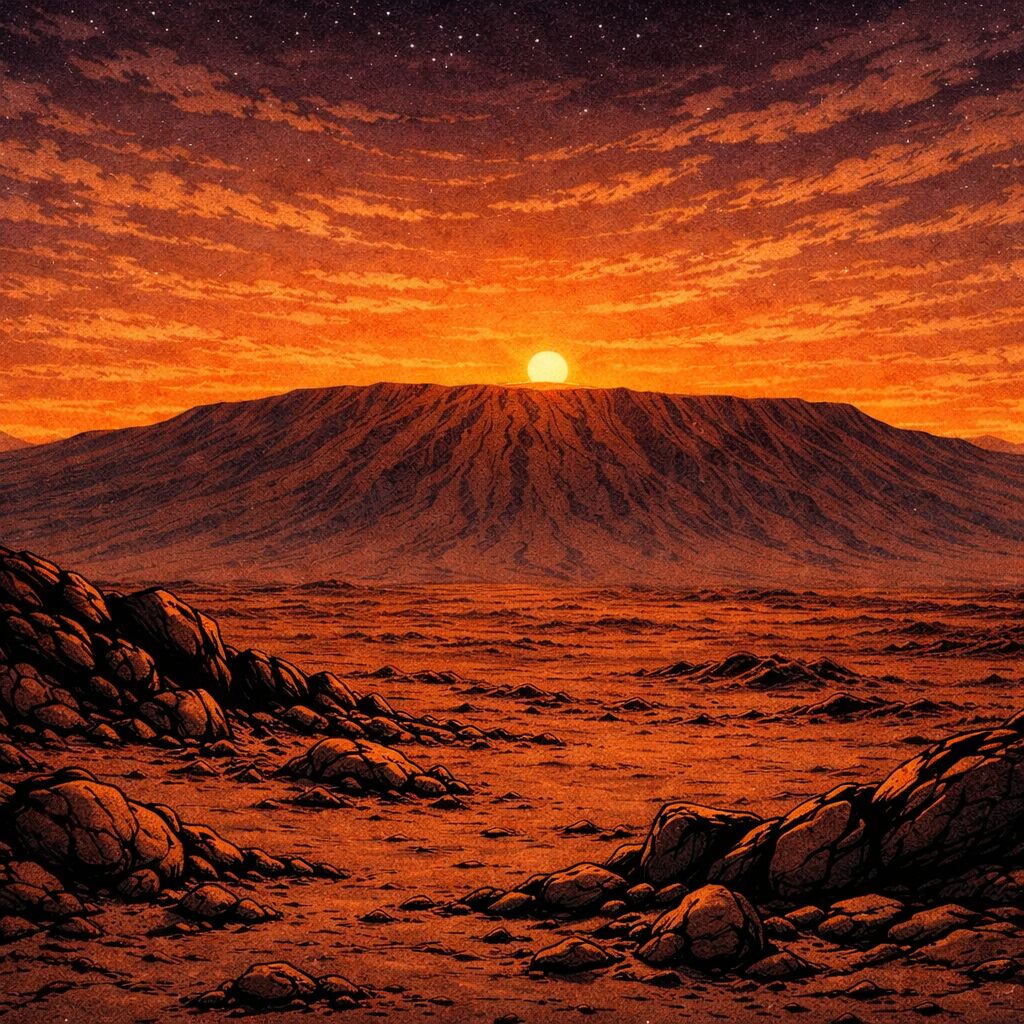
The sunset was exactly what Vesper wanted. Mars glowed red, its slopes cast into long shadows, and above us stretched the cosmic void - black, infinite, cut by the bright streak of the Milky Way.
The atmosphere was so thin that the stars looked as if someone had nailed them directly to the sky.
The participants were delighted.
They laughed, took pictures, and commented on the view.
 I knew only one thing: we are behind with the schedule.
We stop for the night in a small crater, sheltered from the wind and dust. We are already about twelve kilometers above the hypothetical „sea level” of Mars.
Some people go outside. They want to see the landscape at dusk.
The sky is black and sharp. The stars shine brighter than they remember from Earth. The atmosphere above us is so thin that it hardly scatters light. The temperature drops to minus ninety degrees, but the suits insulate us effectively. We feel safe. Comfortable.
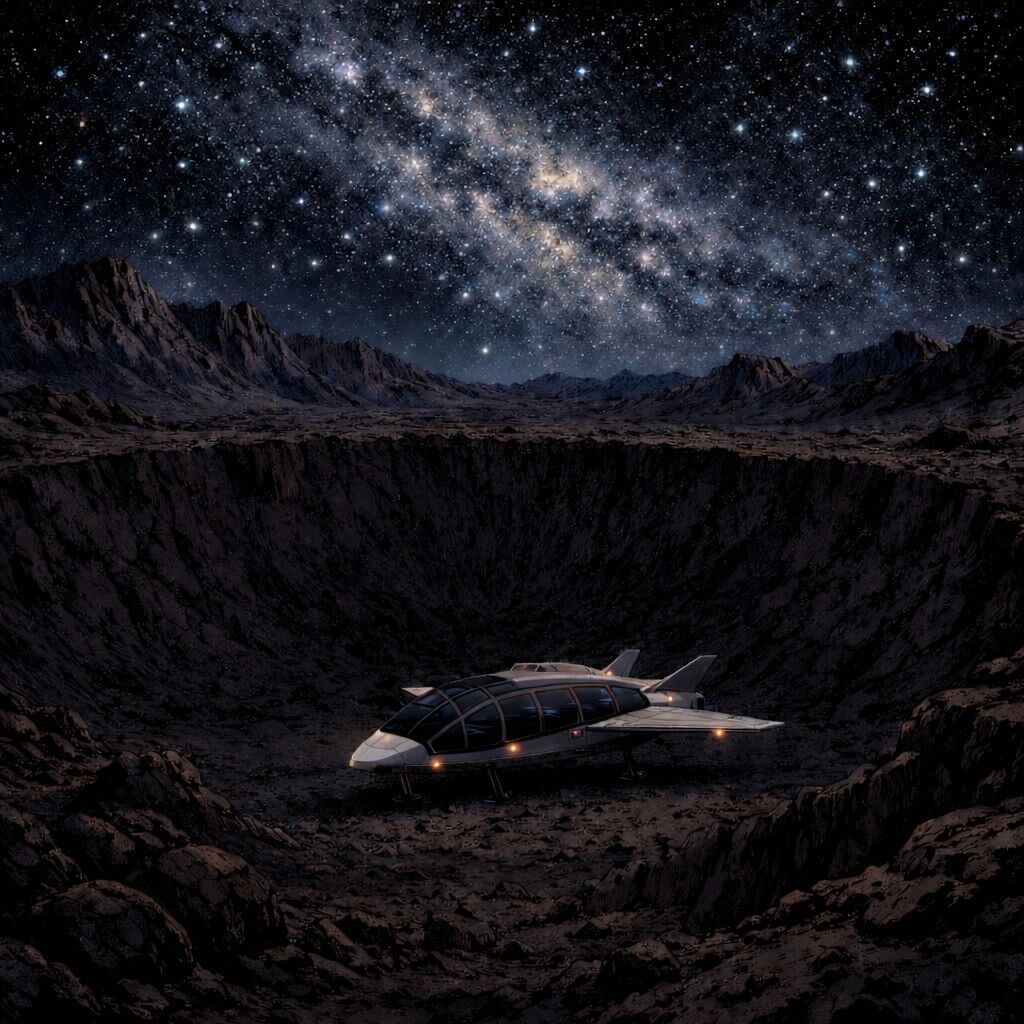 I tell them about the plan for tomorrow. About the „summit attack.”.
About the last five kilometers we will walk - not because we have to, but because people want to feel that they have conquered the mountain.
Along the way we will pass several viewpoints, carefully selected by the agency. Places from which the caldera looks most unreal. Guaranteed shots. Regardless of anything - because there is no weather here. There is only near vacuum and silence.
I can see the excitement in their eyes.
We set off early, but not at dawn. This is a tourist trip, not a military mission.
The first hour we fly as planned. The Aerolander is flying steadily. The parameters are within normal limits. And then the red lights come on one by one. They do not alarm. They don't howl. They just are.
Silence falls in the cabin, which has nothing to do with admiring the views.
The diagnostic system doesn't beat around the bush: unstable pressure in one of the four engines. Probably a tiny crack in the fuel line.
Not critical. More.
Vesper responds immediately.
„It's a small thing, isn't it?” - he says, smiling at the camera. - „People love moments like this. They're authentic.”
I don't answer her right away.
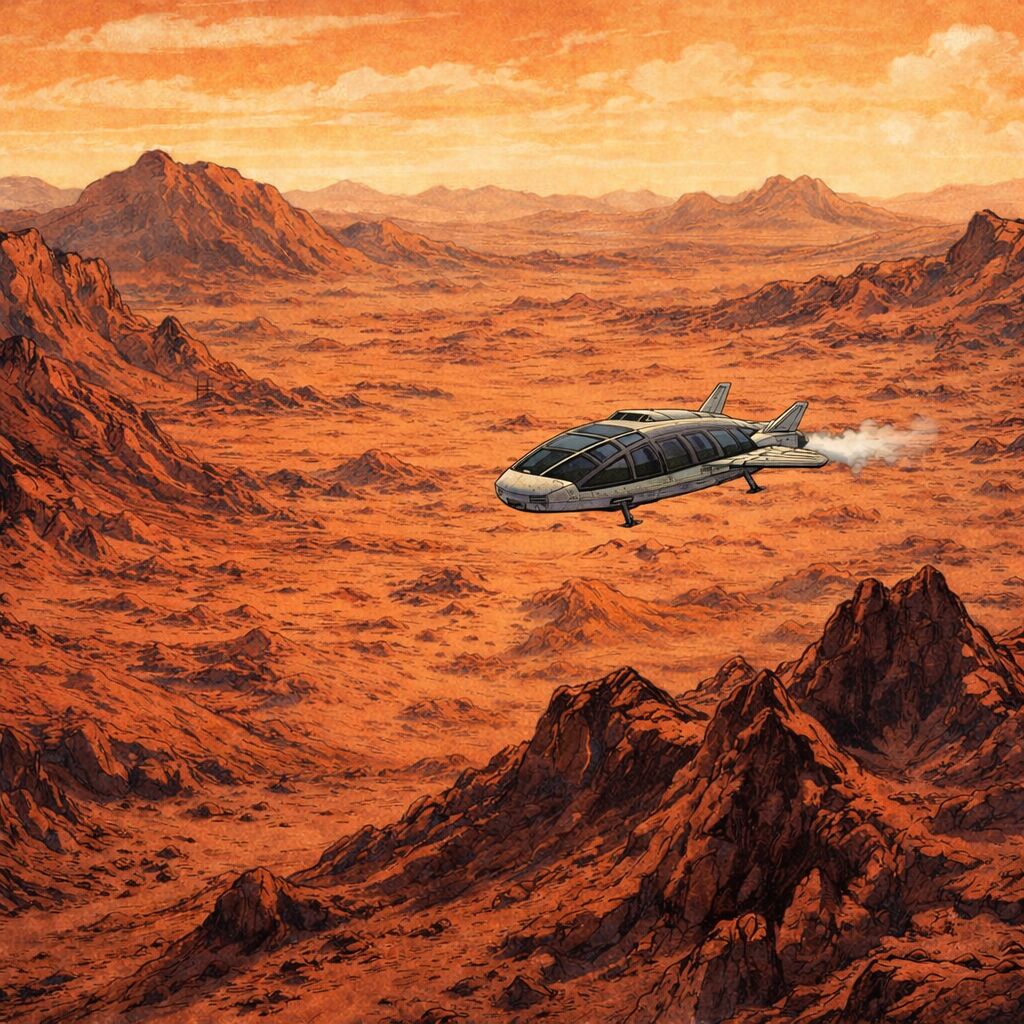 I see two options. I can stop the aerolander, let the service robot out and try to locate the leak. That means wasting time. I don't know how much. Maybe half an hour. Maybe two.
Or I can turn off the engine and continue flying on the other three. The design of the vehicle allows this. The flight will be stable. Theoretically safe.
In one variant, I lose time.
In the second - knowledge of what really happens to the fuel.
[story_progress current=”6″ total=”10″] I turn off the engine.
The aerolander tilts slightly, then stabilizes the flight. The system shows increased energy consumption in the remaining units. Theoretically, it is safe.
Practically - I don't know what exactly happens to the fuel.
We gain time. We lose certainty.
[story_progress current=”6″ total=”10″] I stop the aerolander.
The service robot slides out under the hull. AI system analyzes data, compares patterns, simulates cracks.
The repairs are taking longer than I would like. Much longer.
The leak turns out to be real. A micro-crack in the cable.
We seal them makeshift. Enough to fly on.
The clock doesn't lie. We have lost time.
We are approaching the highest point of the volcano. We leave the aerolander on a stable platform and continue on foot.
The last five kilometers we trudge along the edge of the caldera. The ground appears easy, but hidden cracks make it dangerous. Small faults, crumbly rocks, crevices that, with an inattentive step, could end up flying down for several hundred meters.
We walk slowly, evenly, in silence punctuated only by the breaths of the suits.
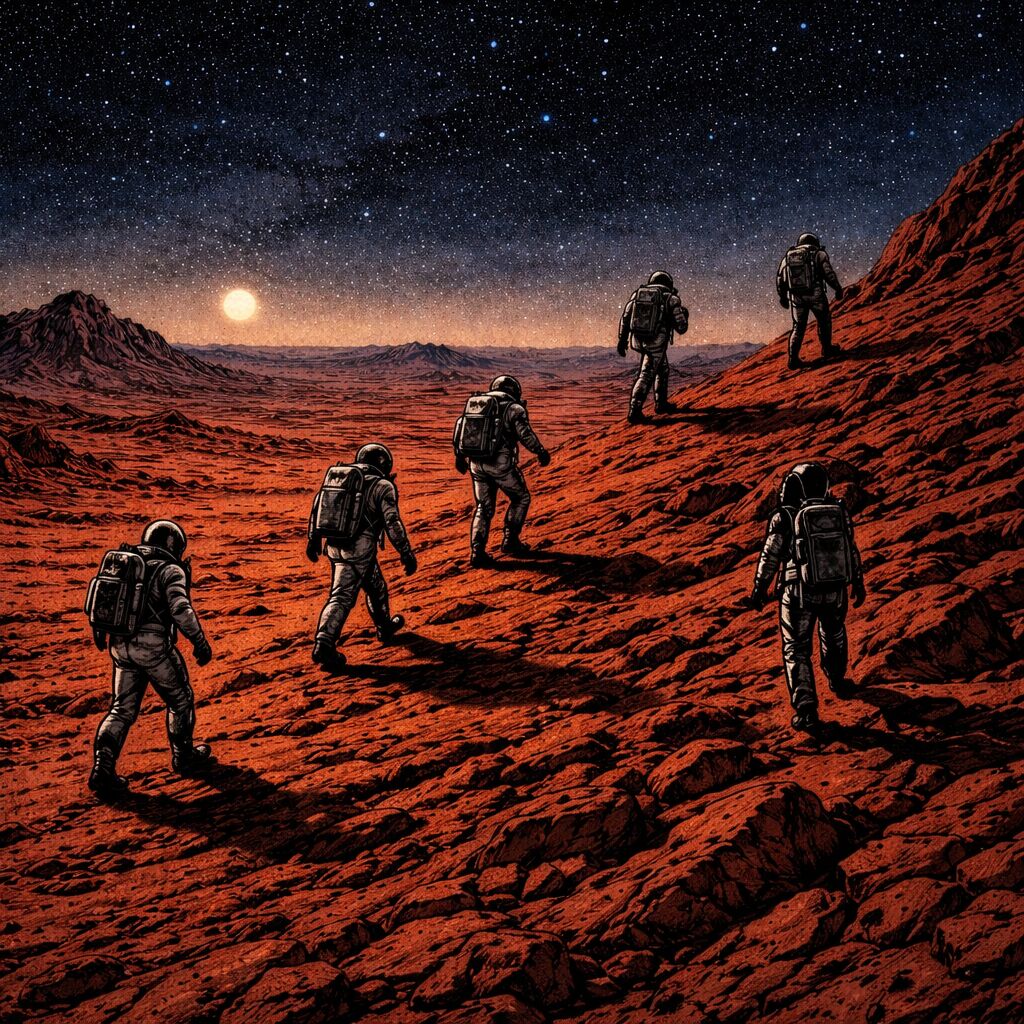 The participants are excited. For them, it's a moment they told their friends about even before they bought their tickets.
For me, it's a highlight.
I already know what waits beyond the next rise. I've seen it dozens of times. And yet - the view always works.
The Olympus Mons caldera opens suddenly, unannounced. Huge, empty, unnaturally symmetrical. Three kilometers down, eighty kilometers wide. The bottom is lost in shadow, as if the planet had been cut with a knife.
Above us an almost absolute vacuum. The sky is black, sharp, with a clear streak of the Milky Way. The stars look as if they are closer than they should be.
The participants fall silent.
Then someone laughs nervously.
Someone else says „it's better than expected”.
Vesper is recording. She's talking about making dreams come true, the limits of human experience, and how „it was worth coming here”.
I'm checking the time. We are exactly halfway there.
We still have five kilometers of walking on the way back and more than six hundred kilometers of flying ahead of us. We will return late at night, if all goes according to plan.
And plans on Mars rarely stick for long.
[story_progress current=”7″ total=”10″] We return leisurely, passing two more viewpoints. These are less spectacular, but look good in the frame.
That's when Vesper informs me that she „walked away just a bit”.
She wanted to record peculiar rock formations. Narrow passages, jagged walls, a natural maze.
„I'm close” she says. „I can see you.”
After a few minutes, her voice sounds different.
More nervous.
She can't read the coordinates on the display. The maze of rocks looks the same in every direction. Here you can't shout and go in the direction of the voice.
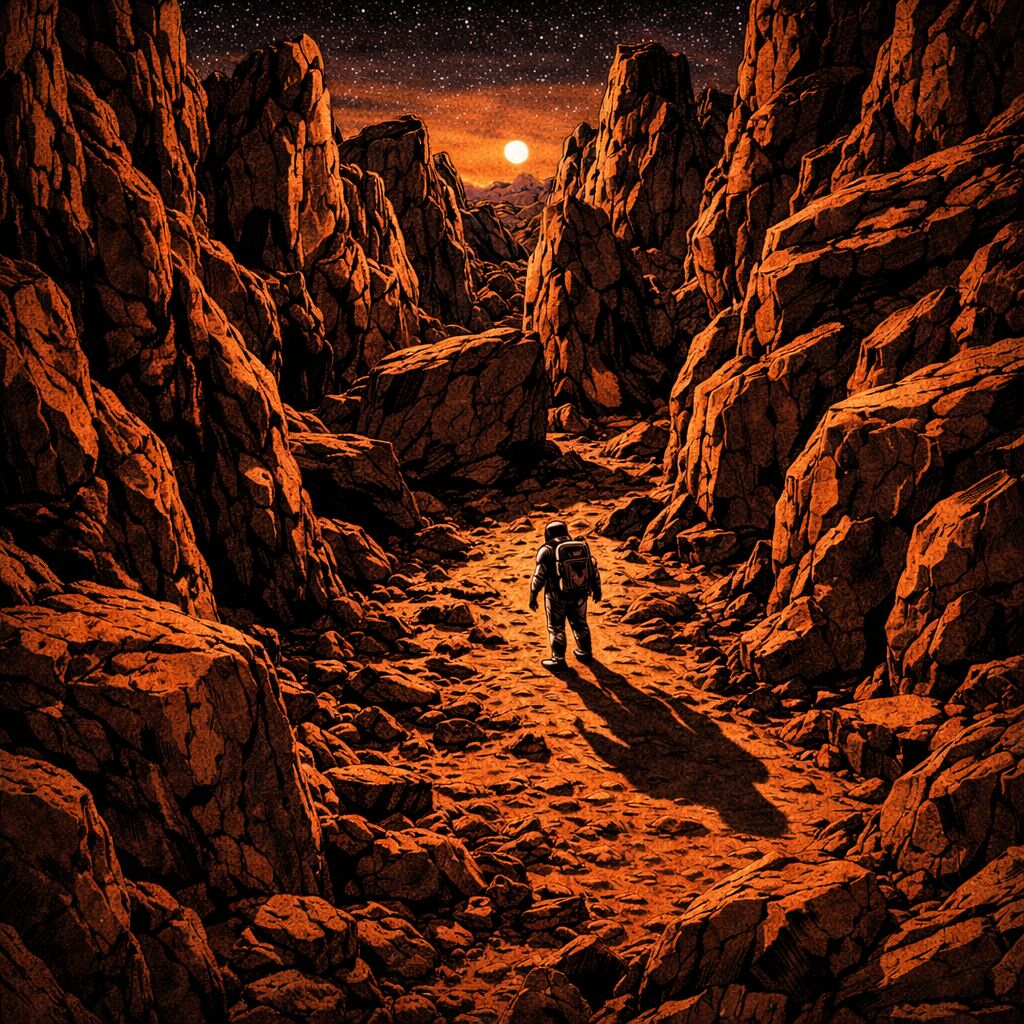 And then she stops answering. „Where the hell did she go?”
We are starting the rescue operation.
It is already completely dark.
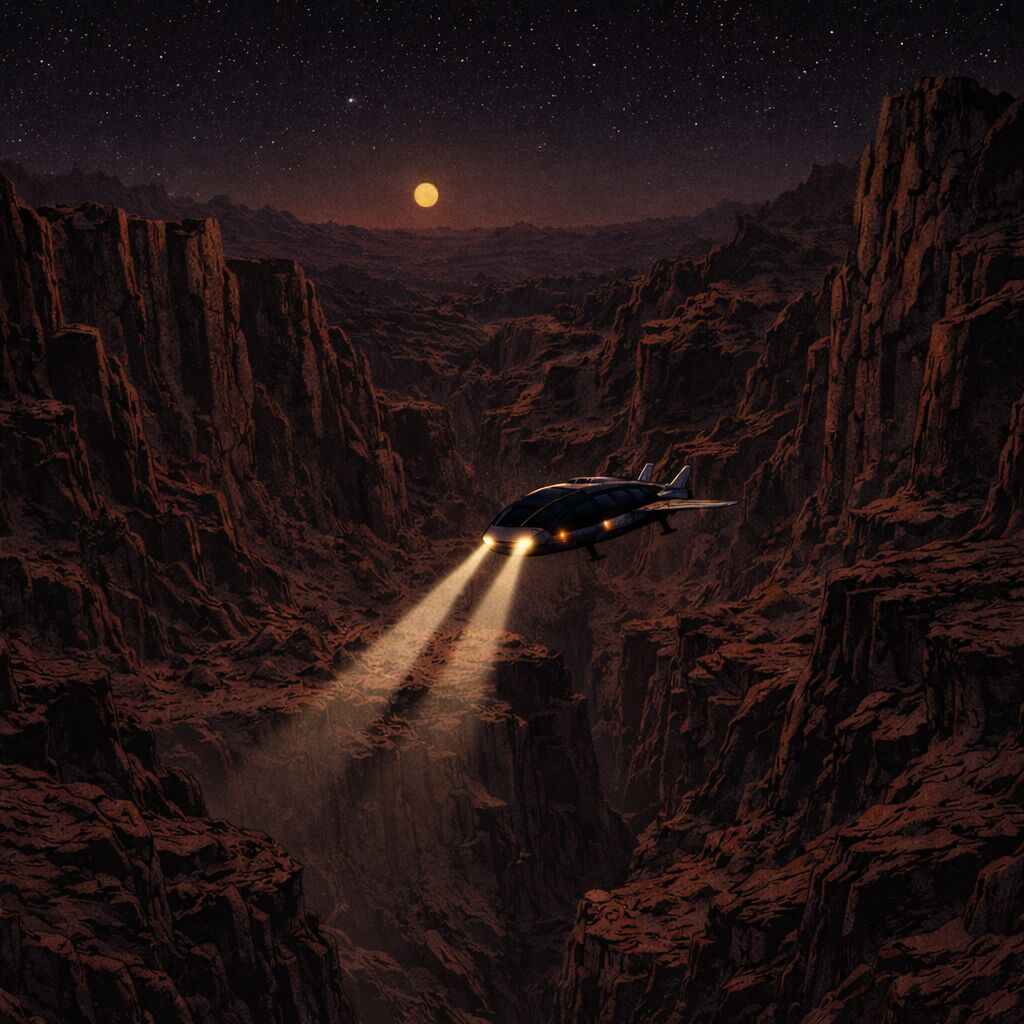
We wasted too much time detouring and repairing the fuel leak. The area below looks like a black, jagged wound on the surface of the planet. Each beam of light cuts shapes out of it that for a split second resemble a human being - and then turn out to be just a rock.
 „Cassian... I... I don't think I know where I am.” - he says.
Her voice trembles. Her breathing is too fast. She tries to calm down, but panic is rising.
It is broadcasting live. The viewer counter in the corner of the screen grows alarmingly fast. Millions of people watch as she sits hunched over in a rock crevice, as she repeats that „it was a mistake,” that „she shouldn't have left.”.
We have been circling for a long time. Too long. The fuel is melting faster than I would like. In my head I start counting how much more I can sacrifice before I have to stop my search.
And then the sensors catch the suit's signal.
I see her in the spotlight - small, huddled against a rock, trembling with cold and fear. When I get off and approach, she rises wobbly and almost bumps into me.
He grabs my shoulders.
„I was so scared... I was already thinking...” - she breaks off in tears.
He laughs and cries at the same time. The camera is still transmitting. The audience relives the moment with her.
We return to the aerolander with a sense of triumph that tastes like relief after a disaster averted.
Only in the cabin, when the pressure stabilizes, one thought reaches me: fortunately, she had our suit. Adapted to near-zero pressure, compatible with the communications system.
I don't even want to think about what would have happened if I had agreed to her fidgeting in the beginning.
We have time.
This is the only thing that allows me to think logically. We didn't deviate from our route yesterday, and the morning repair - although costly - gave us a working aerolander. There was still some light left before sunset.
We take off immediately.
„Cassian, I... I think I'm going in circles.” - I hear on the intercom.
She tries to joke, but her voice trembles. Panic shines through more and more clearly.
We fly low, combing sector by sector. I see her after a few tens of minutes - she is standing in the open, clearly confused, waving her hand towards the camera, as if that will help.
When I approach her, her knees buckle under her. She leans heavily against me.
„I was so scared...” - she whispers.
We return to the aerolander in the last rays of the setting sun. In the background of her transmission, there are thousands of comments full of relief.
Only then do I feel how tense I was. I dread to think what would happen if we lost a client of her caliber.
Before I make a decision, I check the condition of the aerolander more carefully.
The fuel leak is more serious than I assumed. We have exactly enough left to return safely. A search flight is out.
But we have something else: time.
We did not make a detour or a stop for repairs. There were still more than four hours left until sunset.
We set off on foot.
„Cassian... these rocks all look the same.” - he says faster and faster. He tries to read the position from the display, but gets lost in the data. Panic is growing.
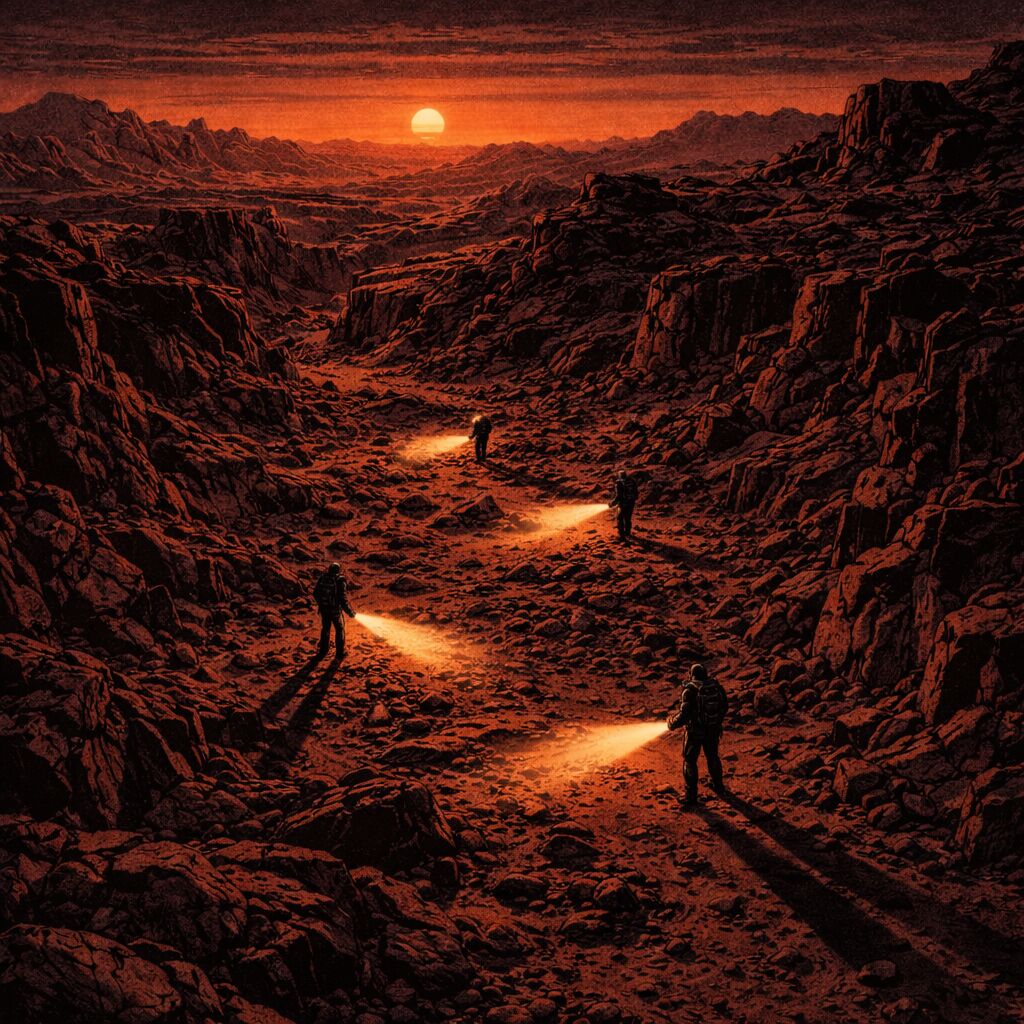 After nearly three hours of walking, I see it in the distance.
When I reach her, she falls into my arms. She screams, cries, shakes her whole body. The camera captures everything - millions of people relive the moment with her.
We return in the last rays of the setting sun, exhausted but okay.
Relief comes only later. When I know I've really made it.
The leakage alarm appears suddenly.
Her private suit was not as good as she assured us. It did not pass our tests. One weaker weld of materials began to separate under near-zero pressure.
„Cassian, I... I can't catch my breath.” - her voice breaks in panic.
I analyze the situation. We didn't waste time on detour yesterday, and I managed to fix the fuel leak. We still have about two hours until sunset and a working aerolander.
The odds don't look bad. More.
The search takes a long time. A maze of rocks confuses the sensors. Her voice becomes more and more disjointed. She loses her bearings and goes in the wrong direction.
In the last rays of light, I see a shimmering point in the distance.
It is her!
When we reach her, she loses consciousness. We transfer her immediately to the aerolander. The pressurized cabin closes with a hiss.
He breathes.
We were a hair away from defeat. If we had arrived ten minutes later, it might have been too late.
We lost too much time through detour and repairing the fuel leak. Now the sun is almost completely disappearing behind the horizon.
Her private suit can't handle the low pressure. It has no emergency light system. It was not designed for such conditions.
„I can't see you... I really can't see”. - I hear her voice on the intercom, interrupted by crying.
We are flying. We circle. We search. Every stone in the spotlight could be her. Every hope is extinguished after a few seconds.
Its live broadcast continues until the end. Millions of people are watching it in suspense. They hear her accusing us, panicking, saying things she no longer controls.
We return empty-handed.
There is silence in the cabin. The participants know that we have lost not only a man, but also a prestige that cannot be easily rebuilt.
And I dread to think what will happen when we return.
Before we set off, I check the condition of the aerolander more closely.
The fuel leak is more serious than I assumed. The sensors don't lie. We have exactly enough left to return to base safely. A search flight is therefore out. If I were to pick up the machine now, I might not return with anyone.
We lost a lot of time on detour. There were about two hours left until sunset.
„Cassian... I think there's something wrong with the suit.” - her voice trembles.
Her private suit can't handle the low pressure. It has no rescue lights. It was not designed for such conditions. I can see on the monitor how the pressure and temperature parameters are dropping.
We have to go on foot.
Too slow.
The area is huge and the light is changing by the minute. The shadows lengthen, the rocks begin to look identical.
„I don't see anything... Cassian, I'm scared,” she says and then starts crying. She tries to joke. Her voice breaks, turns to gibberish.
Her transmission continues. Millions of people watch as she breathes faster and faster, as she loses her bearings, as she accuses us, then apologizes, then accuses us again.
When the light starts to go out, I make a decision that I hate.
We need to withdraw.
I can't risk losing any more people.
„No... please... just a moment longer...” - I hear her on the intercom as we walk away.
Then only heavy breathing.
Then silence.
We return empty-handed.
In the cabin, no one speaks. Everyone knows that we've done everything we can - and that it doesn't change anything.
We did not do detour.
We have time.
But time doesn't fix everything.
I check the aerolander once again. The fuel leak is serious. We have exactly enough left to return. A search flight is out of the question.
We set off on foot.
„Cassian... I'm terribly cold,” she says quietly. Her private suit hisses more and more clearly. The unsealing is progressing slowly but inexorably. The parameters are dropping, even though she tries not to move, to breathe shallowly.
We go as fast as possible, but the terrain slows us down. Rocks, faults, crevices. Each step costs time.
Her transmission continues. Millions of people see her trembling, how she struggles to catch her breath, how she closes her eyes for a moment, only to open them again immediately.
We find it after a few hours.
Still alive.
She lies leaning against a rock, visibly frostbitten, breathing heavily. The camera is transmitting. The image trembles.
„Cassian... I'm suffocating...” - he whispers.
We are trying to move it.
The road to the aerolander is long. Too long.
His breathing is getting shallower and shallower. Words stop forming sentences. Finally, she just moves her lips as if trying to say something.
He dies along the way.
In front of the eyes of millions of people who believed just a moment ago that we would make it.
We return in silence, carrying the body.
Mars is silent.
We lost too much time on detour.
We have two hours until dusk. I check the aerolander. The fuel leak was serious. We have exactly enough left to return. A search flight is out of the question.
We have to go on foot.
„Cassian... I think something is wrong,” he - she says suddenly.
Her voice doesn't sound like panic. Still.
After a while, she adds, „I fell into a crack. My leg got stuck.”
He tries to move. To no avail.
Her suit is working properly. Pressure stable. Temperature within normal range. She is breathing calmly, although you can hear the growing anxiety in her voice.
On her suit's display, she can't see the coordinates. To determine position, the system needs a signal from at least four GPS satellites. In a narrow rock crevice it „catches” at most one, sometimes two.
He cannot give us the location.
Connectivity works - for this you only need a signal from one areostationary satellite. Therefore, it can transmit. It can conduct a transmission. It can describe the rocks around it, trying to give us any kind of reference point.
We search in the dark. An hour passes. Then a second.
Every crevice looks the same. Every shadow could be hers. Or just another trap. The light is fading by the minute.
„Cassian... it's getting cold in here,” he says more quietly. Then: „I... I don't want to stay here.”
I analyze the situation again. Facts, not emotions.
If we stay longer, I risk losing someone else. That we will lose our bearings in the dark. That the story will end with more casualties.
Why didn't I fix the pepper fuel leak? From the air we would have had a chance.
I make a decision.
We interrupt the search.
I tell her calmly. I explain. That she needs to save her strength. I say that we will come back with help. That this is not the end. But I know that's not true....
I don't know if he can hear me.
Her transmission continues. Millions of people hear her cries, her prayers, her questions that no one answers anymore.
We return in silence.
The participants of the expedition do not know what to say. They look at each other - each of them could have been in her place. This feeling hangs in the cabin like a heavy fog.
We are flying towards the base. Her voice can still be heard in the headphones.
Finally, I turn off the transmission.
I am no longer able to listen to it.
I know it was not my fault. And I know it will haunt me in my dreams.
Another day. Morning.
The office is bright. The Martian sun streams in through the panoramic window and reflects off the smooth surfaces of the table. The boss sits across from me, calm and composed, as if he had just finished his morning coffee.
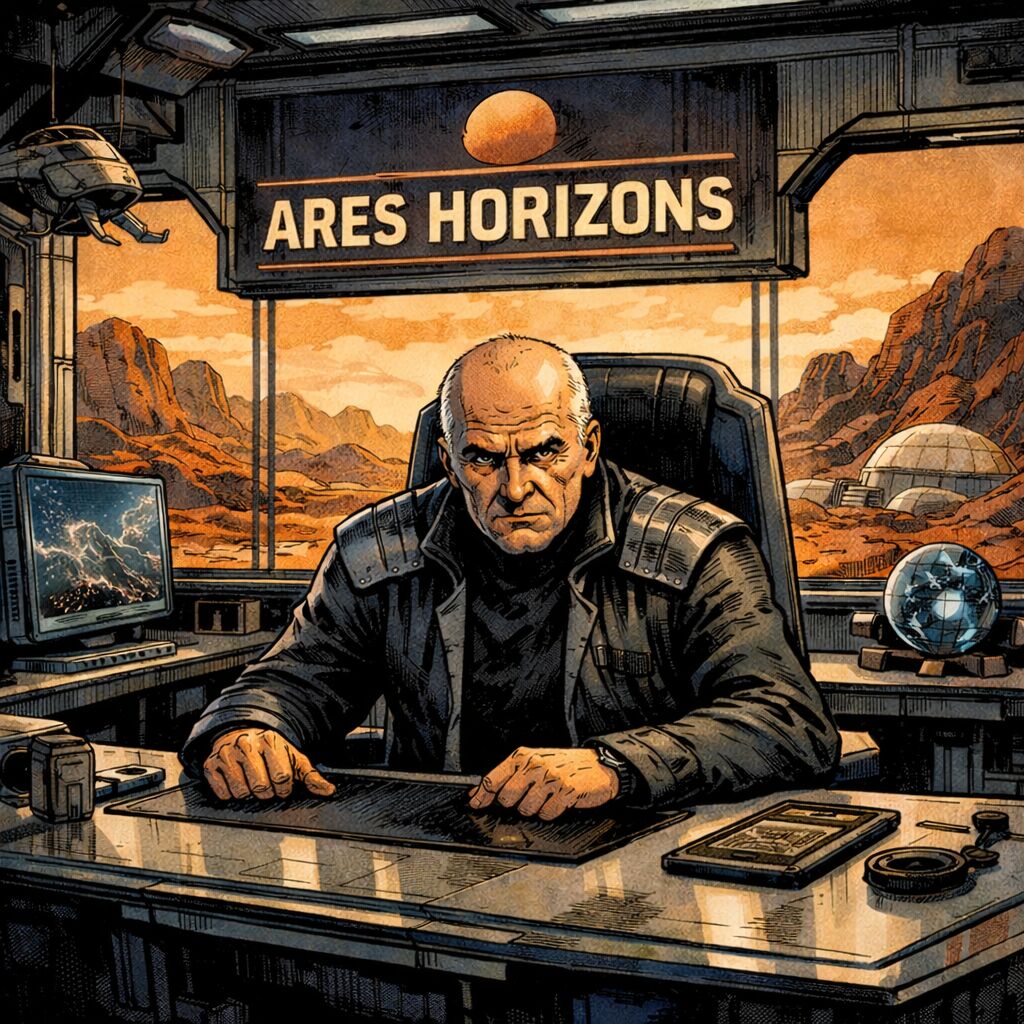 „I need a report, Cassian,” - he says. - „A full one.”
He doesn't ask. He states a fact.
„Chronological. With decisions. With deviations from procedures.”
On the table in front of me a tablet with a report interface. Blank fields. A blinking cursor.
The boss says nothing more. He waits.
And I'm rewinding the whole trip in my head, decision by decision, as if someone let it go one more time in training mode.
I know that these were my decisions. Unfortunately, not all of them accurate.
I shouldn’t have agreed to let her wear her private suit.
I should not change the route for shots.
I should not ignore technical signals.
Procedures exist for something. The mistake was my agreement. My „we'll still make it”, „after all, we always make it”.
I can describe it, admit it. Or I can smooth it over. Leave out some facts, find fault.
If I lie - I will live with it. But if I tell the truth - I can lose everything.
Vesper survived. That's the most important thing. Her material is already a hit. The company gets free advertising that others can only dream of.
I refused to let her wear her custom suit.
I did not agree with the detour.
And when something started to fail - I stopped and made necessary repairs.
This is a rare day when I can honestly say: the procedures were not just a suggestion. I did my best and avoided all pitfalls.
But I can see my mistakes.
I shouldn’t have agreed to let her wear her private suit.
I should not change the route for shots.
I should not ignore technical signals.
Procedures exist for a reason.
Just do I really need to describe everything? Do I want to risk my boss's wrath, loss of bonuses, trust?
I submit my report without abbreviations. Chronologically. Without distortions.
The boss reads the report in silence. He thinks, nodding.
„It was a good job,” - he says in the end.
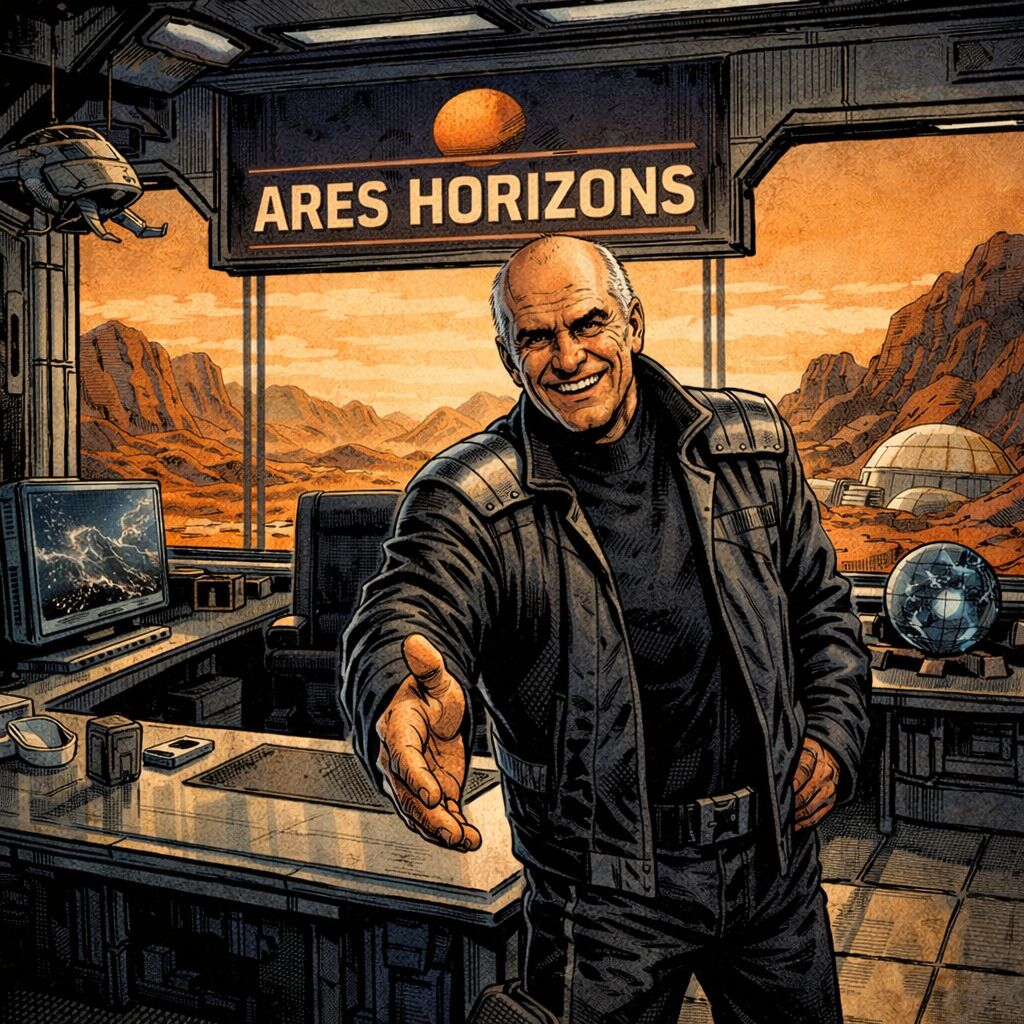 A few days later, another Vesper piece hits the web. An hour-long report. It's loud. It's spectacular. It's authentic.
Olympus Mons has become the most booked tour in our portfolio. And I led more tours, always remembering that the best decision is simply to stick to the rules.
The report is short. Technical. Smoothed out.
I leave aside deviations from procedures - they are irrelevant.
The boss reviews it in a cursory manner. He is interested in the results, not the path to them. He is satisfied.
Vesper material goes viral.
Bookings explode. The company records a record quarter.
Officially, it was a perfectly run expedition.
Unofficially - we were balancing on the border, which is not visible in the statistics.
And sometimes, at night, I think back to those decisions that no one knows.
I submit a full report. No excuses. No abbreviations.
The boss puts down the tablet and remains silent for a long time. This silence says more than any words.
„It's unacceptable,” - he says finally. - „Procedures exist to be followed.”
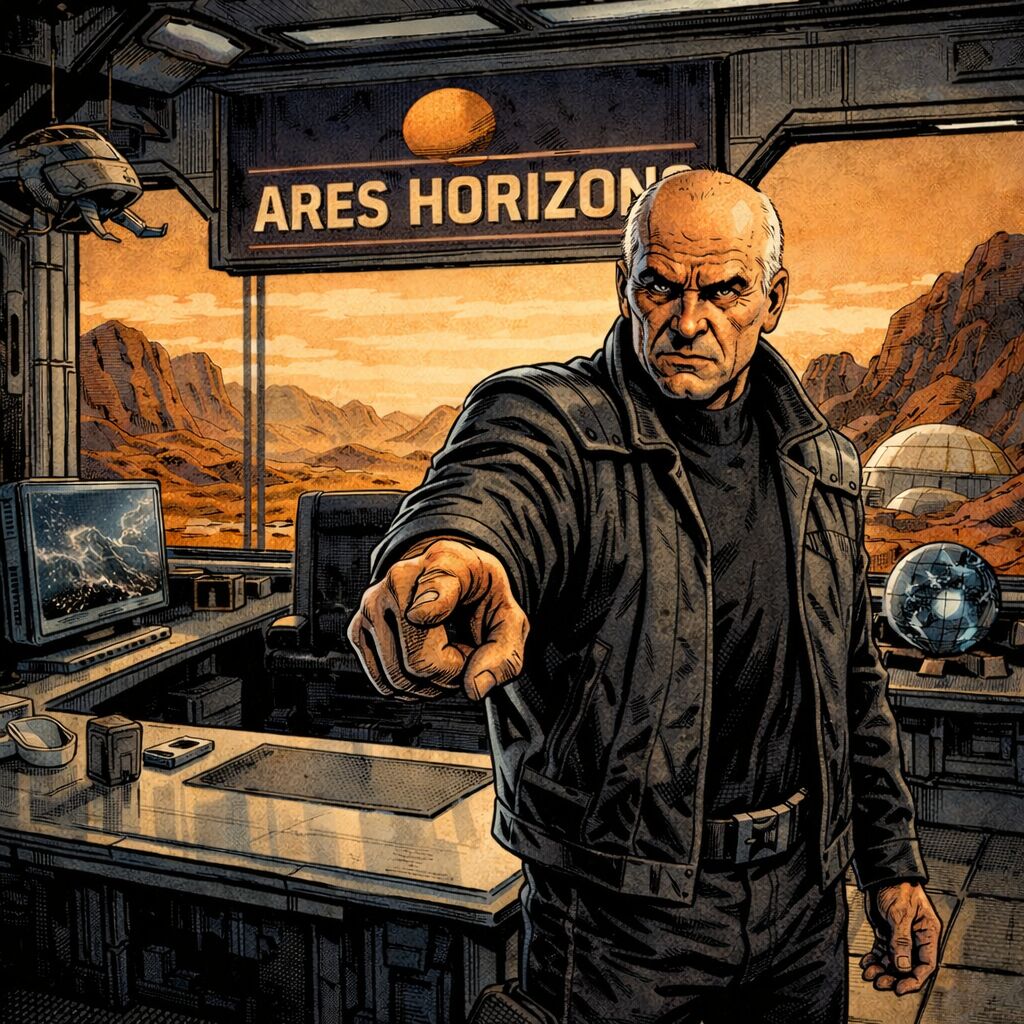 I am removed from flying. The bonus is gone. Confidence too.
The Vesper case has long become a warning in the Martian tourism industry, and procedures have been tightened throughout the sector.
I never went back to Olympus Mons, but at least I know I didn't escape responsibility.
The report passes without major comments. It is correct enough to close the case.
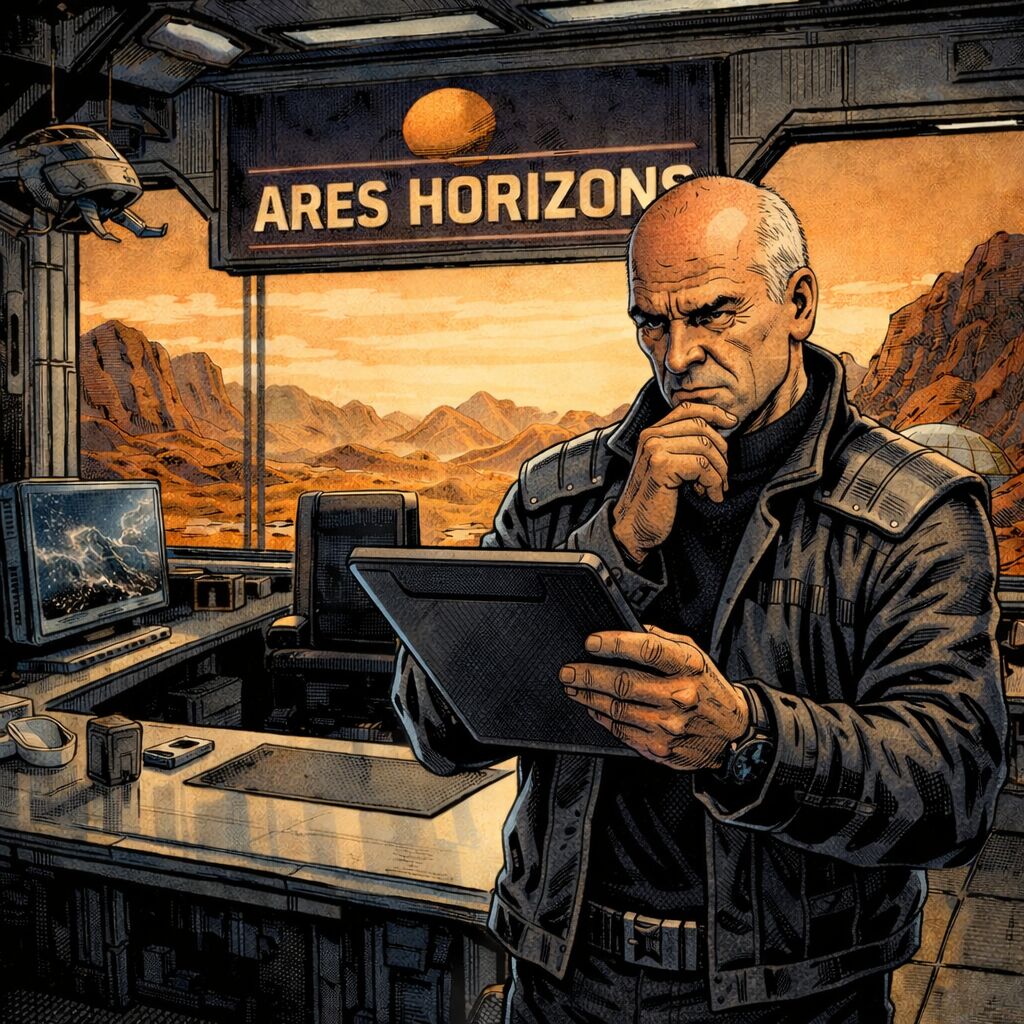 Officially, it was a series of unfortunate events in an extreme environment with no clear culprits.
The company is taking a long time to rebuild its reputation.
Marketing materials are disappearing. Reservations are coming back slowly.
No one knows the full story. Except me.
I never went back to Olympus Mons again. I wouldn't be able to. Still after nights when I can't sleep, I think I hear Vesper's faint voice on the intercom: „Cassian, don't leave me...”
 Polski
  English
  Español
  Deutsch
  Русский
  Français